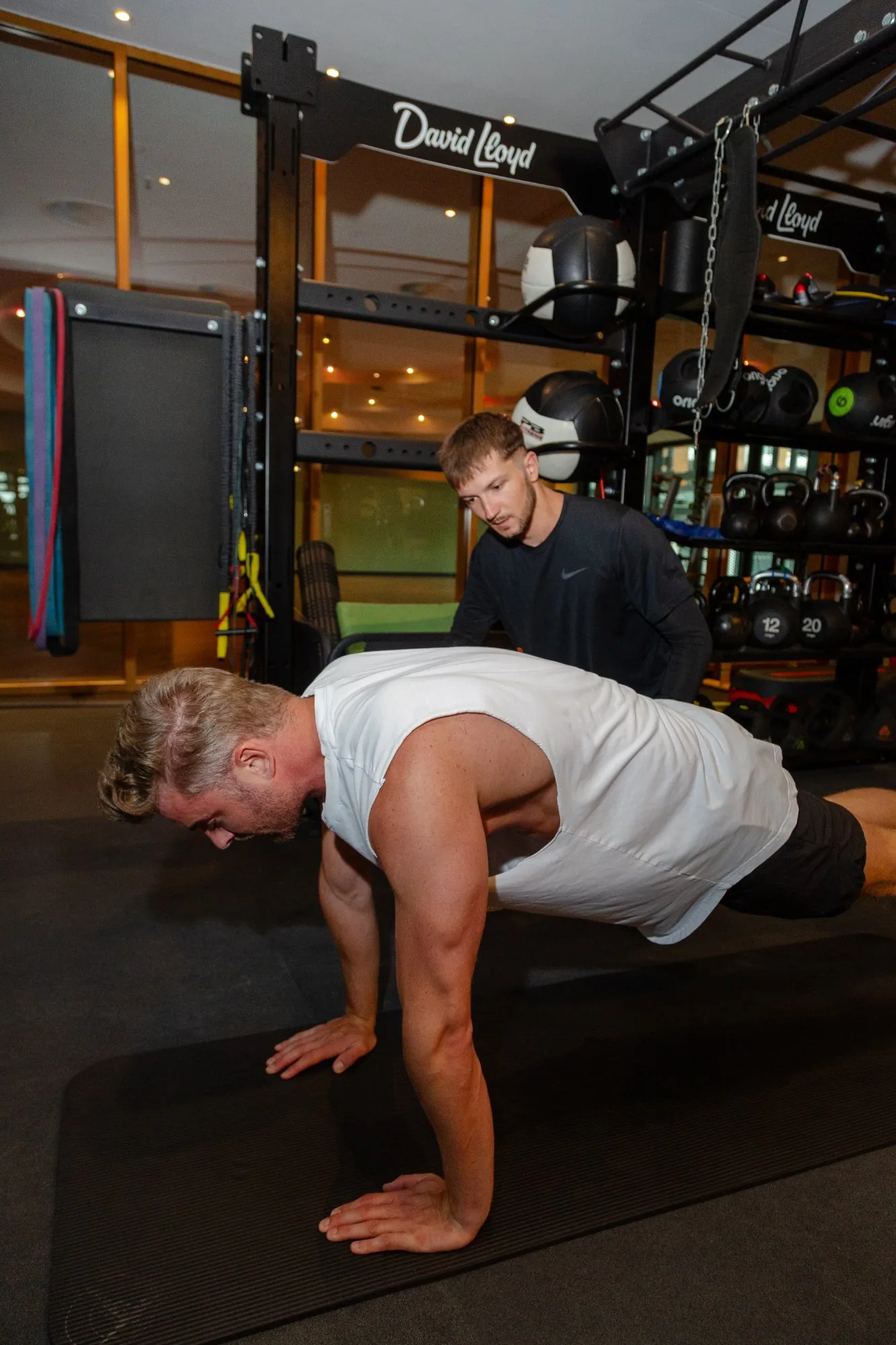
Mobility & Stretching – The Underestimated Foundation of Great Training
Who actually likes stretching? Most gym-goers jump straight from their last set to the showers. Stretching is seen as a waste of time — until the first pain appears.
My client Julia from Frankfurt knows this. She came to me with chronic knee pain that had been plaguing her for months. After just a few sessions of targeted mobility training, the pain was significantly better. No medication. No doctor. Just the right mobility work.
Mobility vs. Flexibility — what is the difference?
Flexibility means a joint can be passively brought into a certain range (someone pushes your leg up). Mobility means you can actively use that range under control — and produce force there.
A joint can be very flexible but barely mobile. That is dangerous: you can do a deep squat, but have no control there. High injury risk.
The goal is active mobility — ranges of movement you can control with strength. This protects joints and measurably improves training performance.
The most important mobility areas
- Hips — squats, sprints, everything in daily life benefits from this
- Thoracic spine — shoulder problems often originate here, not in the shoulder
- Ankles — restricted mobility forces compensation in the knee and hip
- Shoulders — neck tension, bench press pain — often a mobility problem
When to stretch — before or after training?
Before training: Dynamic stretching and mobility drills. No long static holds — this temporarily reduces force production. Move joints through their full range, warm up the muscles.
After training: Static stretching. Now you can hold 30–60 seconds per stretch. The muscle is warm, the nervous system relaxed. Ideal for long-term flexibility gains.
How much is enough?
10 minutes daily beats 60 minutes once a week. Frequency beats intensity — even with stretching. A short mobility routine in the morning after waking or in the evening before sleep changes noticeably how your body feels in 4–8 weeks.
Train pain-free and mobile
I integrate mobility work purposefully into your training plan — for better performance and less pain.
Book free consultation →